



MCT4
Monocarboxylate transporter 4 (MCT4), encoded by SLC16A3, is a proton-coupled monocarboxylate transporter that mediates lactate transport and contributes to intracellular pH regulation and metabolic homeostasis[1][2]. As a key component of glycolytic metabolism, MCT4 supports the export of lactate generated during high glycolytic flux, thereby facilitating maintenance of the acidic extracellular microenvironment associated with metabolic adaptation[2][3]. Mechanistically, MCT4 expression is strongly induced by hypoxia through a HIF-1α-dependent transcriptional program, linking lactate transport directly to cellular hypoxic responses and metabolic reprogramming[4][2]. In cancer models, elevated MCT4 expression is associated with enhanced glycolytic phenotypes and increased lactate handling, highlighting its relevance in tumor metabolism and disease progression[3][5]. Compared with related isoforms, MCT4 displays distinct functional specialization as a predominantly lactate-exporting transporter, whereas MCT1 is broadly involved in bidirectional monocarboxylate transport and MCT2 exhibits substantially higher substrate affinity[2]. This isoform-specific role makes MCT4 particularly important in highly glycolytic and hypoxic cellular environments where efficient lactate efflux is required[2]. For experimental applications, pharmacological inhibition and genetic knockdown of MCT4 reduce lactate transport activity in cancer cell models, supporting its utility as a target for investigating metabolic adaptation, tumor bioenergetics, and lactate-dependent signaling pathways[6].
References:
- [1]. Fisel P, et al. Clinical and Functional Relevance of the Monocarboxylate Transporter Family in Disease Pathophysiology and Drug Therapy. Clin Transl Sci. 2018 Jul;11(4):352-364. [Content Brief]
- [2]. Khalili M, et al. Underserved Does Not Mean Undeserved: Unfurling the HCV Care in the Safety Net. Dig Dis Sci. 2018 Dec;63(12):3250-3252. [Content Brief]
- [3]. Baño V, et al. Characterization and Structural Performance in Bending of CLT Panels Made from Small-Diameter Logs of Loblolly/Slash Pine. Materials (Basel). 2018 Nov 30;11(12):2436. [Content Brief]
- [4]. Ullah MS, et al. The plasma membrane lactate transporter MCT4, but not MCT1, is up-regulated by hypoxia through a HIF-1alpha-dependent mechanism. J Biol Chem. 2006 Apr 7;281(14):9030-7. [Content Brief]
- [5]. Peret A, et al. Contribution of aberrant GluK2-containing kainate receptors to chronic seizures in temporal lobe epilepsy. Cell Rep. 2014 Jul 24;8(2):347-54. [Content Brief]
- [6]. Mukai Y, et al. Involvement of SLC16A1/MCT1 and SLC16A3/MCT4 in l-lactate transport in the hepatocellular carcinoma cell line. Biopharm Drug Dispos. 2022 Oct;43(5):183-191. [Content Brief]
All Product Categories
-
MCT4 Related Products (9)
Related Products (9)

-
VB124
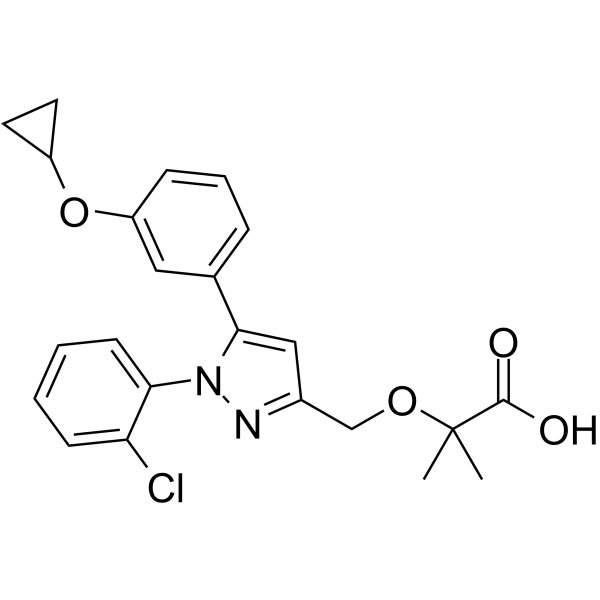 0 ImagesVB124 is an orally active, potent, and selective MCT4 inhibitor. VB124 can specifically inhibit lactate efflux with IC50s of 8.6 nM and 19 nM for lactate import and export in MDA-MB-231 cells, respectively. VB124 is highly selective for MCT4 over MCT1. VB124 can be used for the research of cardiac hypertrophy, heart failure, and metabolism.
-
Syrosingopine
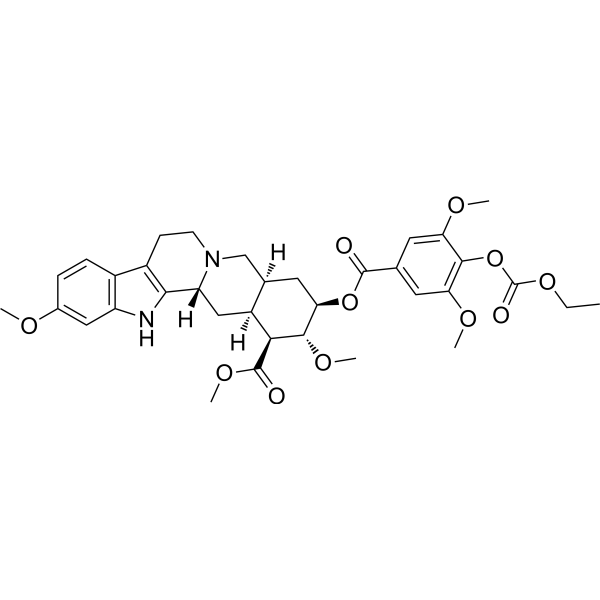 0 ImagesSyrosingopine (Su 3118) is an orally active lactate transporters (MCT1/MCT4) dual inhibitor, which can reduce glycolysis and induce synthetic lethality in cancer cells when combine with metformin. Syrosingopine shows anti-hypertensive activity by depleting peripheral stores of norepinephrine.
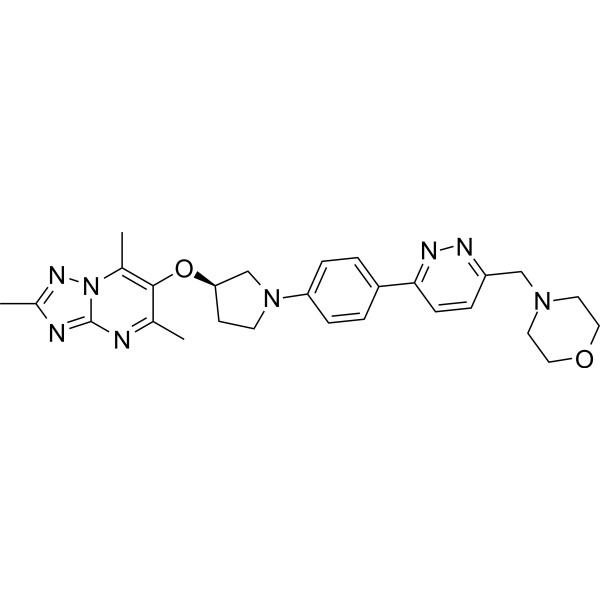
-
MSC-4381
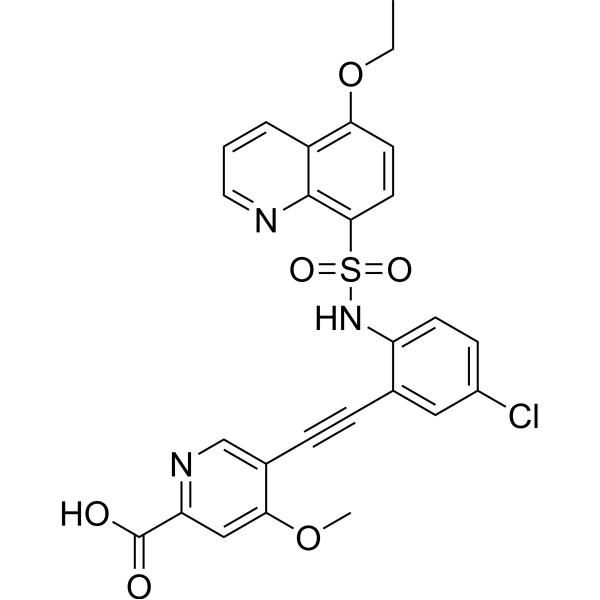 0 ImagesSynonyms: MCT4-IN-1MSC-4381 (MCT4-IN-1), a chemical probe, is an orally active and selective monocarboxylate transporter 4 (MCT4/SLC16A3) inhibitor with an IC50 of 77 nM and a Ki of 11 nM. MSC-4381 targets to the cytosolic domain of MCT4. MSC-4381 results in lactate efflux inhibition and reduction of cellular viability in MCT4 high expressing cells. MSC-4381 has the potential for MCT4 transporter inhibition research. MSC-4381 is a click chemistry reagent, it contains an Alkyne group and can undergo copper-catalyzed azide-alkyne cycloaddition (CuAAc) with molecules containing Azide groups.

-
2-Hydroxy-4-methoxybenzoic acid
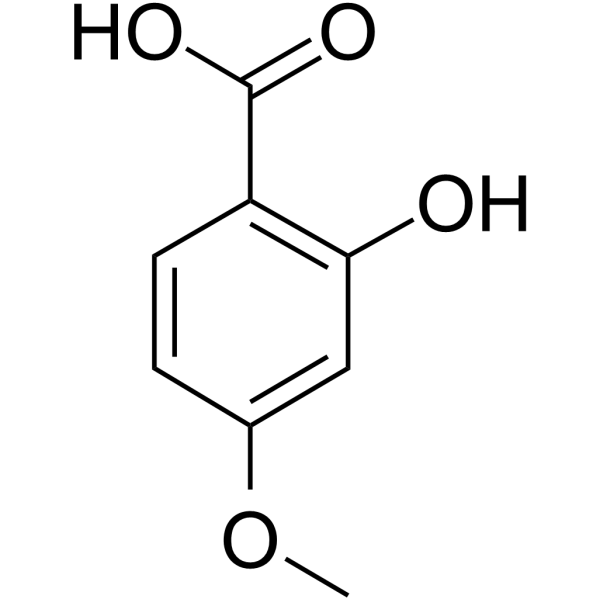 0 Images2-Hydroxy-4-methoxybenzoic acid is an orally active inhibitor of MCT-1 and MCT-4, as well as a plant biomarker. 2-Hydroxy-4-methoxybenzoic acid can be isolated from roots. 2-Hydroxy-4-methoxybenzoic acid induces Apoptosis and loss of mitochondrial membrane potential. 2-Hydroxy-4-methoxybenzoic acid exhibits anticancer activity against breast cancer. 2-Hydroxy-4-methoxybenzoic acid normalizes lactic acid levels. 2-Hydroxy-4-methoxybenzoic acid neutralizes viper venom and attenuates its lethal, hemorrhagic, coagulant and anticoagulant activities in male albino mice. 2-Hydroxy-4-methoxybenzoic acid possesses antihyperlipidemic, antidiabetic and hepatoprotective activities.
-
slCeMM1
 0 ImagesCat. No.: HY-182416CAS No.: 949973-22-2slCeMM1 is a selective SLC16A3 (MCT4) inhibitor. slCeMM1 inhibits lactate transport, induces intracellular lactate accumulation, reduces viability of SLC16A3-dependent cells, and inhibits growth of SLC16A3-dependent cells. slCeMM1 can be used for the research of rheumatoid arthritis and cancer.
-
PEG9MA10-PAB10-GalMA10
 0 ImagesCat. No.: HY-184926PEG9MA10-PAB10-GalMA10 is a CD147 LYTAC degrader. PEG9MA10-PAB10-GalMA10 binds to the asialoglycoprotein receptor (ASGPR) via its galactose methacrylate domain, mediating its uptake by hepatoma cells. PEG9MA10-PAB10-GalMA10 induces lysosome-dependent degradation of CD147, resulting in concurrent loss of associated MCT1 and MCT4. PEG9MA10-PAB10-GalMA10 reduces extracellular lactate levels, increases intracellular lactate accumulation, inhibits glycolytic activity, and enhances mitochondrial respiratory capacity. PEG9MA10-PAB10-GalMA10 decreases the secretion of MMP-2 and MMP-9, and upregulates the expression of E-cadherin. PEG9MA10-PAB10-GalMA10 exhibits anti-tumor efficacy in hepatoma models. PEG9MA10-PAB10-GalMA10 can be used for research on liver cancer (hepatocellular carcinoma).
-
MCT4-IN-2
 0 ImagesCat. No.: HY-189476CAS No.: 2230187-60-5MCT4-IN-2 is an orally active monocarboxylate transporter MCT4 inhibitor. MCT4-IN-2 inhibits the activity of MCT4. MCT4-IN-2 can be used for the research of inflammatory diseases, proliferative diseases and pulmonary fibrosis.



